
Most vacuum cleaners lose performance gradually, which makes early problems easy to miss. A little less suction, a louder motor, or a faint burning smell can seem minor at first, but these warning signs often point to issues that become more expensive if left unresolved.
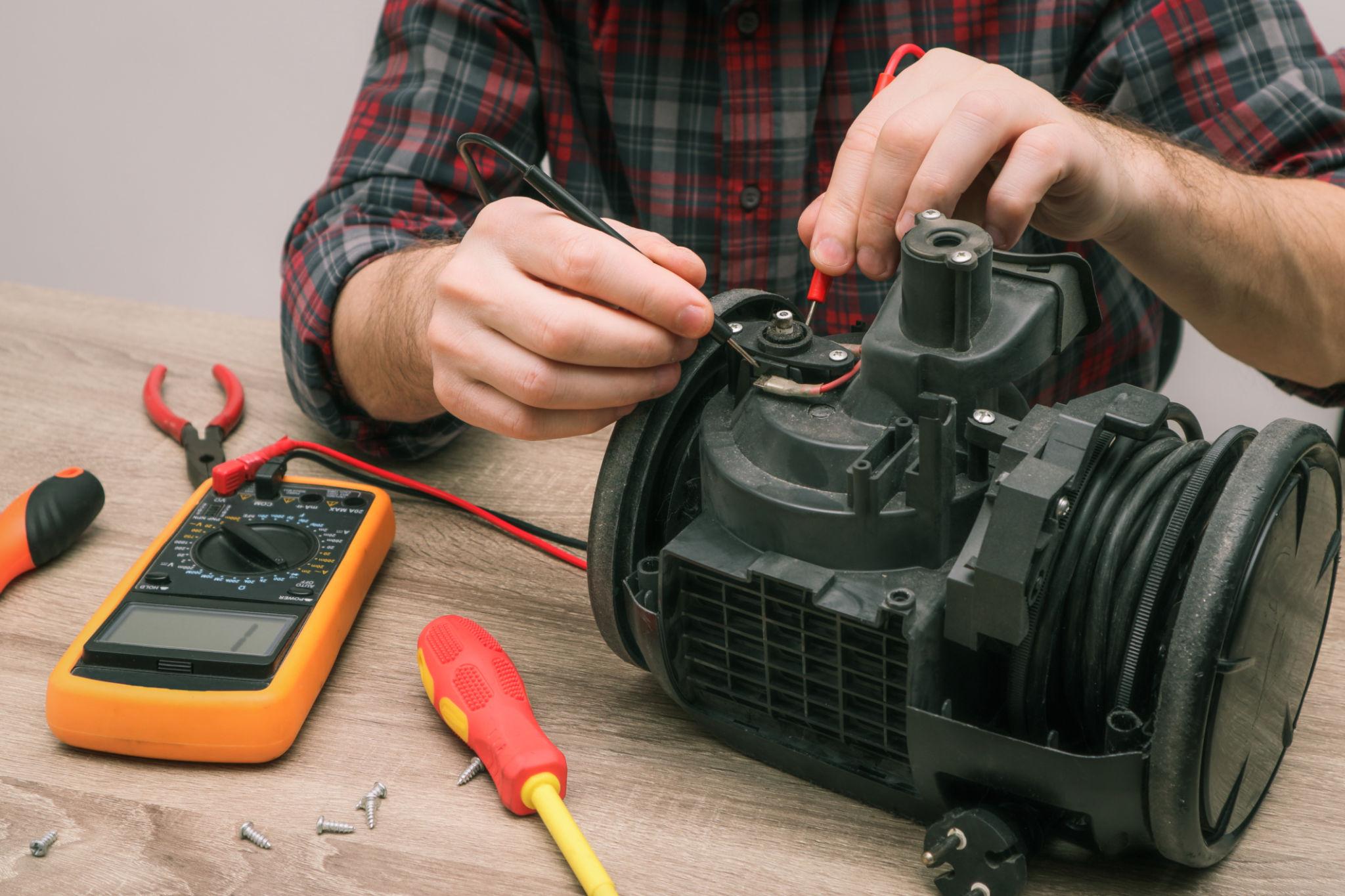
For homeowners, the key is knowing when your vacuum cleaner simply needs a clean and when it needs proper repair. Common faults such as clogged filters, worn brush rollers, damaged hoses, overheating motors, and faulty switches can all affect performance and shorten the appliance’s lifespan. Acting early can help restore suction, prevent further damage, and keep your vacuum cleaner working properly for longer.
If your vacuum cleaner is no longer picking up dirt properly, the problem is usually related to airflow. While a full dust bag or container is the obvious first thing to check, ongoing vacuum cleaner suction problems are often caused by blocked hoses, clogged filters, cracked seals, or worn internal components. Even a small blockage can reduce airflow enough to affect cleaning performance across the entire machine.
Loss of suction can also happen gradually, which is why many people don’t notice the issue straight away. You may find yourself vacuuming the same area repeatedly, noticing crumbs left behind on hard floors, or seeing pet hair remain stuck in carpet fibres. These are all signs that the vacuum is struggling to maintain proper airflow.
A vacuum cleaner burning smell is one of the clearest indicators that something needs attention. Sometimes the smell comes from a worn drive belt overheating as it struggles to turn the brush roller. In other cases, blocked airflow can cause the motor to run hotter than normal, creating a noticeable hot or electrical smell during use.
If the smell appears suddenly or becomes stronger over time, it is best to stop using the vacuum cleaner until the issue has been checked properly. Continuing to run an overheating vacuum can damage the motor permanently, turning what could have been a straightforward repair into a much larger expense.
A noisy vacuum cleaner is not always caused by age. Rattling, grinding, whistling, or high-pitched noises often point to a specific mechanical issue developing inside the machine. Loose fan blades, damaged bearings, blocked hoses, or debris trapped in the brush roller can all change the sound of the vacuum noticeably.
Whistling noises are commonly linked to air leaks or cracks in hoses, while grinding sounds can indicate worn motor bearings or damaged moving parts. If the vacuum suddenly becomes much louder than normal, it is usually a sign that one component is forcing the rest of the machine to work harder.
If your vacuum turns off by itself after running for a few minutes, overheating is the most likely cause. Most modern vacuum cleaners have a thermal cut-off switch designed to protect the motor when temperatures become unsafe. Once the vacuum cools down, it may switch back on again, but the underlying problem still needs attention.
Blocked filters are one of the most common causes of vacuum cleaner overheating because they restrict airflow and trap heat inside the motor. Full dust containers, clogged hoses, or obstructions near the floor head can create the same issue. In some cases, the motor itself may already be wearing out and overheating under normal use.
The brush roller plays a major role in lifting dirt, dust, and hair from carpets. When it stops spinning properly, cleaning performance drops quickly, even if the vacuum still seems to have decent suction. A vacuum cleaner brush problem is often caused by tangled hair, damaged belts, or worn roller bearings.
One of the easiest signs to spot is when the vacuum leaves visible debris behind on carpeted areas or fails to pick up pet hair effectively. You may also notice uneven cleaning lines or hear the roller struggling during operation. In some models, the brush roller may stop completely if the belt has snapped.
Regularly cleaning tangled hair and checking for wear helps prevent unnecessary strain on the motor and drive system. If parts are damaged, replacing them early with the correct vacuum cleaner spare parts can restore performance without replacing the entire appliance.
Not every vacuum cleaner problem means you need to buy a new one. In many cases, common faults such as blocked hoses, damaged floor tools, worn filters, faulty switches, or broken brush rollers can be repaired quickly and at a reasonable cost. If the vacuum cleaner still runs well overall and replacement parts are available, repairing it is often the more practical option.
The age and quality of the appliance also matter. A higher-quality vacuum cleaner with a strong motor is usually worth repairing, especially if the issue is isolated to one component. Replacing a filter kit, hose assembly, or floor tool is significantly cheaper than replacing the entire machine.
Replacement becomes more worthwhile when the motor has failed completely, repair costs are unusually high, or the appliance has developed repeated faults across multiple components. In most cases, though, repairing a well-built vacuum cleaner is the smarter move.
If your vacuum cleaner is losing suction, overheating, making unusual noises, or simply not cleaning like it used to, it is worth getting it checked before the problem gets worse. We can help with vacuum cleaner spare parts, general appliance spare parts, and professional diagnostics to pinpoint what is actually going on. Whether you know the exact part you need or you would rather have an expert take a look, reach out to Axial for practical advice, quality parts, and reliable repair support.
Start by emptying the dust container, cleaning the filters, and checking the hose for blockages. If your vacuum cleaner is still not picking up dirt after that, the issue may be a damaged seal, worn floor tool, or internal fault.
Filters, hoses, floor tools, brush rollers, belts, switches, and chargers are often worth replacing. These vacuum cleaner spare parts can restore performance without needing a whole new machine.
Not always. A noisy vacuum cleaner can be caused by trapped debris, a cracked hose, a loose floor tool, or a worn brush roller. If the sound is grinding, high-pitched, or getting worse, it is worth having it checked.
Book a vacuum cleaner repair service if the vacuum keeps overheating, turns off by itself, smells hot, blows dust out, or still performs poorly after basic cleaning and filter checks.
