
You usually don’t realise how much you rely on your fridge until something goes wrong with it. A fridge that suddenly stops cooling properly can quickly lead to spoiled groceries, leaking water on the kitchen floor, or a very inconvenient clean-out you didn’t plan for.
The good news is that many common fridge problems start with smaller warning signs before a major breakdown happens. Strange noises, inconsistent temperatures, bad smells, or a fridge running constantly are often early indicators that something isn’t working properly. Knowing what to look out for can help you deal with problems sooner, avoid unnecessary food waste, and potentially save the cost of replacing the appliance altogether.
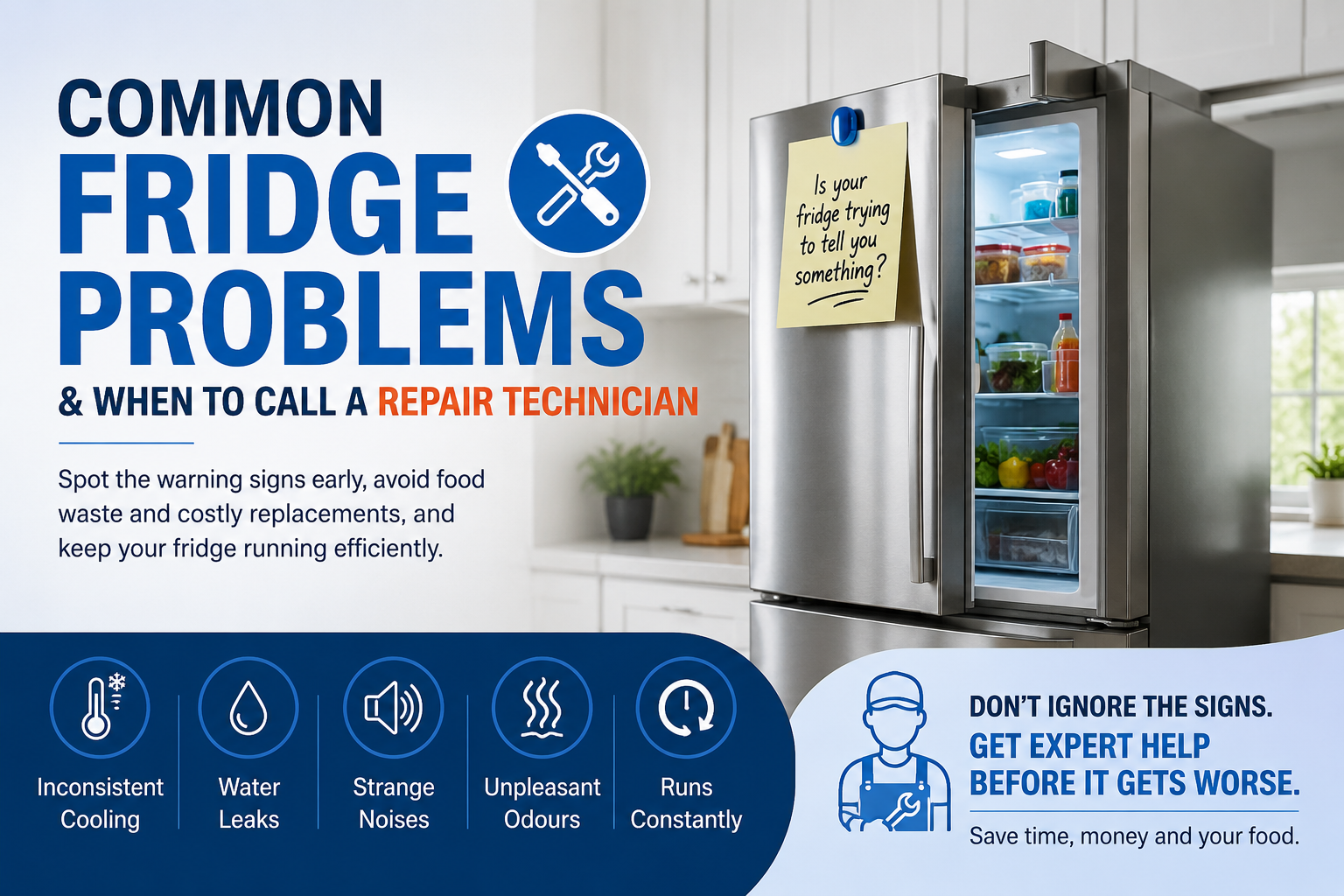
One of the most common fridge problems is inconsistent cooling. You might notice milk going off sooner than expected, drinks not feeling properly cold, or certain shelves staying colder than others. Sometimes the change is gradual, which makes it easy to ignore until the fridge clearly isn’t performing the way it should.
There are several possible causes behind a fridge not working properly. Dirty condenser coils, damaged door seals, blocked vents, faulty thermostats, or failing fan assemblies can all affect airflow and temperature control. If cold air can’t circulate properly, the fridge has to work harder to maintain temperature, which puts extra strain on internal components over time.
If adjusting the settings and cleaning the fridge doesn’t improve the issue, it’s usually one of the clearer signs your fridge needs repair before the problem becomes more expensive.
Water leaking inside or underneath the fridge is another issue that shouldn’t be ignored. In many cases, the problem comes from a blocked defrost drain or excess condensation caused by damaged door seals.
Food debris, ice build-up, or blocked drainage channels can stop water from draining correctly, leading to puddles under drawers or water collecting on the floor. While it may seem minor at first, ongoing leaks can damage flooring, create unpleasant smells, and lead to mould build-up around the appliance.
Fridges usually aren’t completely silent, but if yours suddenly starts buzzing loudly, clicking, rattling, or humming more than usual, it’s often a sign that something needs attention.
A noisy fridge can be caused by worn fan motors, loose components, compressor strain, or blocked airflow. Sometimes the issue is relatively simple, such as an uneven shelf or loose panel, but louder or ongoing noises often point to mechanical wear developing inside the appliance.
Changes in noise usually happen before a complete breakdown, which is why unusual sounds are one of the more overlooked signs your fridge needs repair.
A bad smell in the fridge isn’t always caused by old leftovers hiding in the back corner. If the smell returns shortly after cleaning, there may be an issue with trapped moisture, blocked drainage, or poor airflow inside the appliance.
Drain channels, seals, and vents can collect food residue and moisture over time, particularly if spills aren’t cleaned quickly. Excess condensation can also create damp areas where odours develop more easily.
If cleaning the fridge thoroughly doesn’t solve the issue, there may be an underlying problem affecting ventilation or drainage that needs proper attention.
Most fridges switch on and off throughout the day to regulate temperature. If your fridge seems to run constantly without stopping, it usually means the appliance is struggling to maintain cooling efficiently.
Dirty condenser coils are one of the most common causes because they make it harder for heat to escape properly. Damaged seals can also allow cold air to leak out, forcing the compressor to keep running to compensate. Overloaded shelves and blocked vents may also affect airflow inside the fridge freezer.
A fridge running continuously often leads to higher power bills and additional wear on internal components, particularly the compressor and fan system.
In many situations, repairing a fridge makes far more sense than replacing it completely. Issues involving thermostats, fan assemblies, seals, hinges, shelves, handles, or other fridge parts are often straightforward to repair when caught early.
For fridge freezers from brands such as LG, Fisher & Paykel, Electrolux, Haier, Mitsubishi, Beko, Simpson, and Westinghouse, replacing individual appliance spare parts is usually much more cost-effective than purchasing a brand-new appliance.
If your fridge is leaking, struggling to cool properly, making unusual noises, or showing other signs of wear, professional servicing can help identify the problem before it gets worse. Many common faults can be repaired efficiently with the right diagnostics and replacement parts.
At Axial, we provide fridge servicing and repair support along with access to fridge parts and other appliance spare parts for a wide range of household brands and models. Whether you need a replacement thermostat, fan assembly, shelf, hinge, handle, or help diagnosing a fault, our team can help keep your fridge freezer running reliably for longer.
If your fridge isn’t staying cold, keeps running constantly, leaks water, makes unusual noises, or struggles to maintain temperature properly, these are all signs your fridge needs repair.
You should call a fridge repair technician if basic cleaning and maintenance don’t solve the issue, or if the fridge not working properly starts affecting food storage or daily use.